The old phone network is being switched off
On 31 January 2027 the copper telephone network that most UK landlines run on is retired for good. This is not a sales tactic and it is not optional. Here is what it actually means for a business in Northern Ireland, without the scare tactics.
Time left until you lose your landline
5
months until the old phone network switches off on 31 January 2027.
Every business still on a traditional landline or an on-site phone system has to move before then. Doing it now is cheaper and calmer than doing it in a rush.
The short version
For about a century, business phone calls have travelled down copper wires to a national network called the PSTN, the public switched telephone network. That network is old, expensive to maintain and being closed down. After 31 January 2027 it will not be there.
Anything that relies on it stops working. In practice that means traditional landlines, ISDN2 and ISDN30 circuits, and any phone system in your building that connects to the outside world through copper lines. Calls will instead travel over an internet connection, which is what people mean when they say VoIP or hosted telephony.
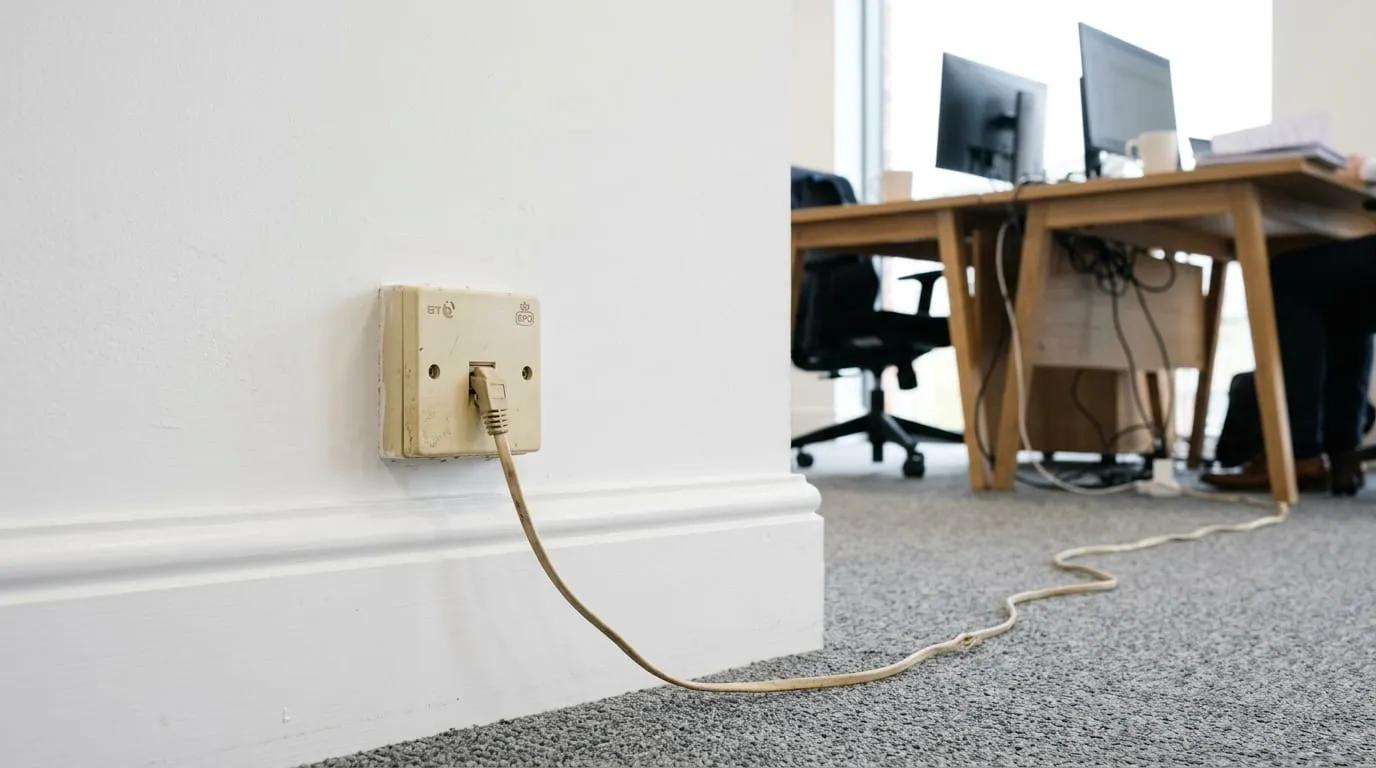
If your phone plugs into a socket in the wall and your calls have never gone anywhere near your broadband, this affects you.
What actually stops working
The phones are the obvious part. The things people forget are the ones that cause the panic:
- Intruder and fire alarm signalling. Many alarm systems dial out over a phone line to a monitoring centre. No line, no signal.
- Lift emergency phones. Legally required to work, and usually wired to an analogue line.
- Card payment terminals. Older terminals dial out rather than use the network.
- Door entry and intercom systems. Especially in older buildings and shared premises.
- Fax lines, franking machines and alarm redcare circuits. Still surprisingly common in solicitors, surgeries and manufacturers.
Walk round the building and list everything with a phone cable coming out of it. That list is your switch-off project. Most businesses find two or three things they had forgotten about.
What you probably have right now
There are three types of connection a business typically has, and knowing which one you are on tells you how big a job this is.
| What you have | Calls at once | Typically found in | What replaces it |
|---|---|---|---|
| A single analogue line (POTS) | One | Shops, salons, one-person businesses | A hosted extension, or a number that rings your mobile |
| ISDN2, sometimes called BRI | Two | Small offices with a phone system | A hosted phone system |
| ISDN30, sometimes called PRI | Thirty | Larger offices, practices, manufacturers | A hosted system with as many call channels as you actually use |
That last row is where most of the wasted money sits. An ISDN30 gives you thirty simultaneous calls whether you use thirty or six, because the number is fixed in hardware. On a modern system the number of channels is a setting, so you pay for what you use and it can be changed the same day. More on how ISDN worked.
Why waiting costs you money
Openreach has been raising prices on legacy lines through 2026 to push people off them, in stages, with the practical effect that a business still on copper in late 2026 is paying considerably more than it was at the start of the year for a service that is about to stop.
There is also a queue problem. Every business in the country has the same deadline. The people who leave it to the last quarter will be competing for the same engineers and the same number transfer capacity as everyone else who left it late. Moving in a calm month is a different experience to moving in a panicked one.
What replacing it involves
- Work out what you have. Ten minutes on the phone, or we look at your last bill.
- Check the broadband. Voice uses very little bandwidth, so most connections are already fine. We check rather than assume.
- Move the numbers. Your numbers transfer to the new system. This is the part with a lead time, which is why starting early matters.
- Deal with the other things on the line. Alarms, lifts, card machines. Some need a different solution and we will tell you which.
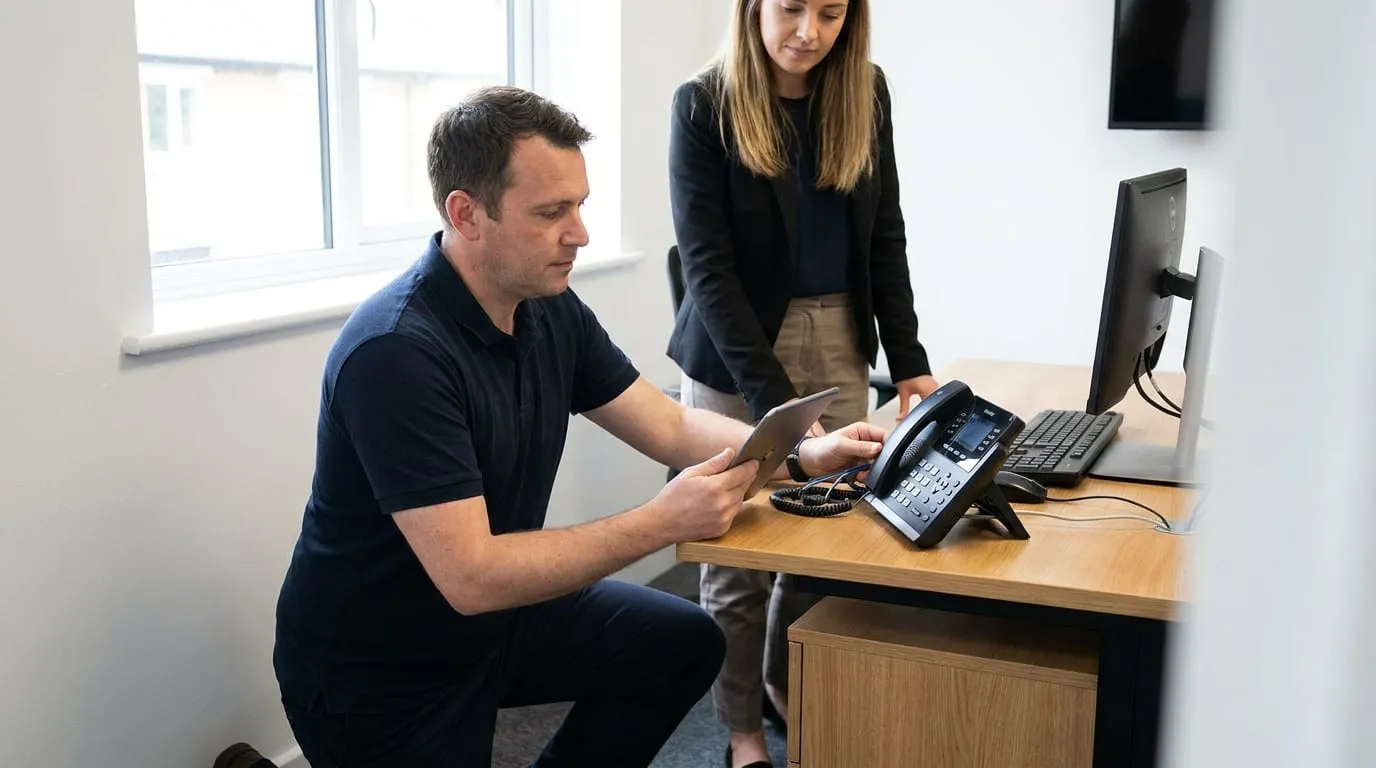
- Phones go in. Handsets arrive configured. For most small businesses this is an afternoon.
What it costs
For most small businesses, less than what they are currently paying. A hosted phone system from us is ten pounds per phone per month, or fifteen with unlimited UK landline and mobile calls, with every feature included. Handsets start at thirty pounds one off and are free if you take five or more.
Compare that against your current line rental, your maintenance contract and your call charges, and the switch-off usually turns out to be the excuse to fix a bill that was too high anyway.
We keep a longer Northern Ireland switch-off guide with a six-step checklist, sector-by-sector risks and links to independent sources including Ofcom and nibusinessinfo. It is free to republish, so if you run a business group or write about this locally, take it.
What we would actually advise
Do not rush into anything on the strength of a cold call, including ours. Do walk round the building and list what is on a phone line. Do find out what you are currently paying, in total, across every line and every maintenance agreement. And do start the conversation in good time, because the number transfer is the slow bit and it is not one you can hurry in January 2027.
If you want a second opinion on a quote you have had from someone else, ring us and we will give you one. We would rather be useful than pushy.
Switch-off questions we get asked
When exactly is the PSTN switch-off?
31 January 2027. That is the date BT retires the public switched telephone network, the copper phone network that traditional landlines run on. The date has moved before, but it is now fixed and the industry is working to it.
Does this affect my business?
If you have a traditional landline, an ISDN2 or ISDN30 circuit, or a phone system in a cupboard connected to copper lines, then yes. If you already make calls over the internet, you are done.
If you are not sure which you have, ring us and describe what is in the building. It takes about a minute to work out.
What about my alarm, lift line or card machine?
This is the part most people forget. Anything that quietly uses a phone line is affected: intruder and fire alarm signalling, lift emergency phones, door entry systems, card payment terminals and some door intercoms. They all need checking before the line goes.
We flag these when we survey, and we will tell you what needs a different solution even where that is not something we sell.
Will my phone number change?
No. Numbers move across to the new system and keep working exactly as they do now. You do not need to reprint anything or update your signage.
Is it cheaper to wait?
The opposite. Openreach has been putting prices up on legacy lines through 2026 specifically to encourage people off them, so waiting costs more each quarter. There is also a capacity problem coming: everyone who leaves it late will be trying to move in the same few months.
How long does moving actually take?
For a typical small business, about a day of actual work once the numbers have transferred. The number transfer itself is the slow part and depends on your current provider. Plan on a few weeks start to finish, and far less stress if you start it now rather than in late 2026.
Not sure what you are on?
Send us a copy of your last phone bill, or just describe what is in the cupboard. We will tell you what you have, whether it is affected and what it would cost to replace. No charge and no obligation.
Answered 24/7